| Treatment | Robotic Gynaecological Surgery |
|---|---|
| Also known as | Robotic-assisted surgery, robot-assisted gynaecological surgery |
| Used for | Selected gynaecological procedures, including hysterectomy, myomectomy, endometriosis surgery and other complex pelvic procedures where appropriate |
| How it works | The surgeon controls robotic-assisted instruments from a console to perform surgery through small abdominal incisions, with a magnified 3D view of the surgical area |
| Anaesthesia | Usually performed under general anaesthesia |
| Incisions | Several small abdominal incisions are typically required, depending on the procedure |
| Hospital stay | Varies according to the type and complexity of surgery and the patient’s recovery |
| Downtime | Depends on the specific gynaecological procedure performed; recovery is generally shorter than after comparable open abdominal surgery |
| Treatment course | Usually a single surgical procedure, followed by post-operative review and recovery |
| Suitable for | Women undergoing selected procedures for conditions such as uterine fibroids, endometriosis, pelvic organ prolapse or other gynaecological conditions where minimally invasive surgery is appropriate |
Robotic-assisted surgery combines minimally invasive surgical access with a computer-assisted system designed to enhance the surgeon’s view and control of instruments during an operation.
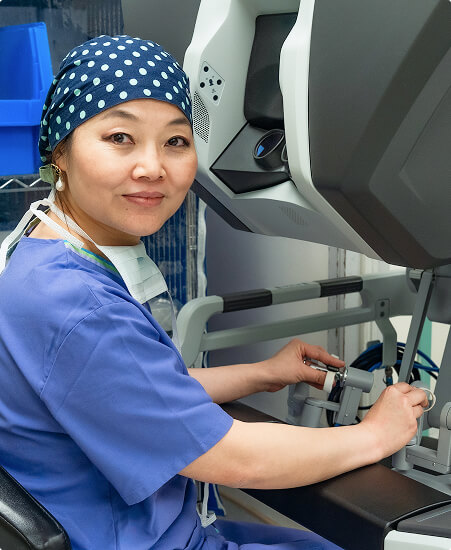
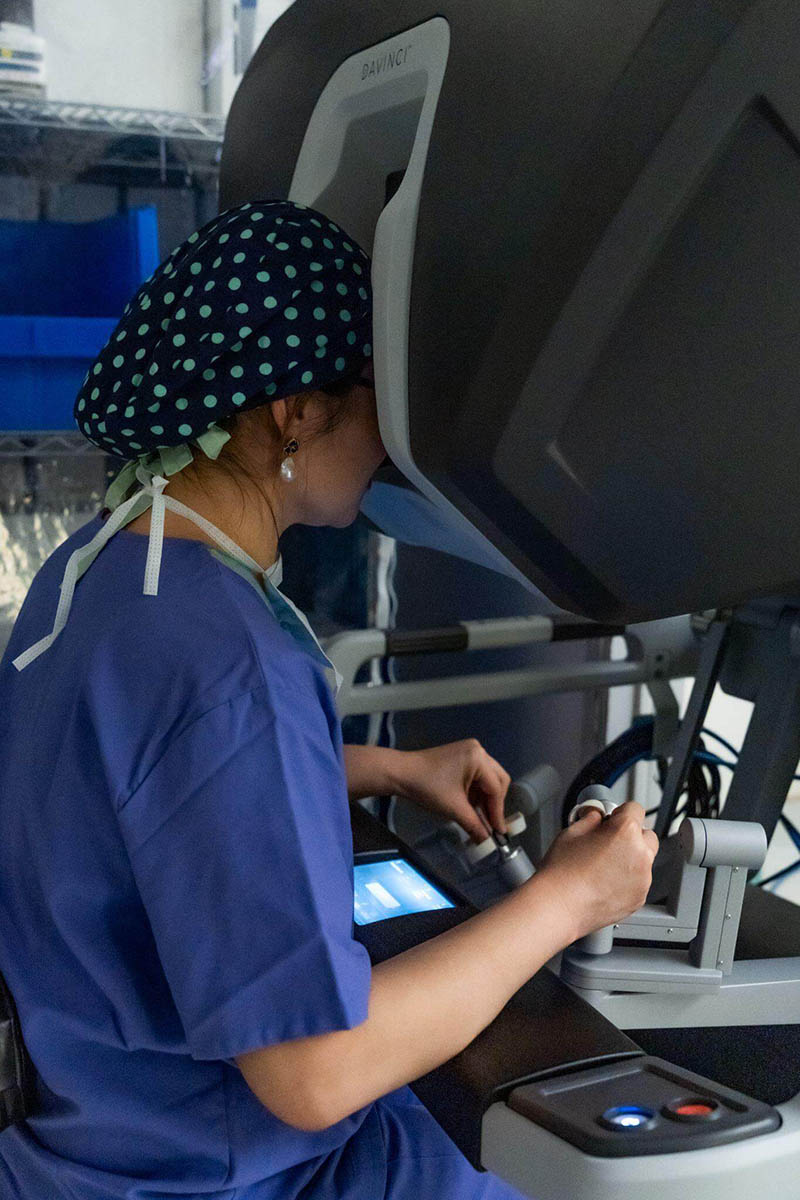
The system consists of a surgeon console, a patient-side unit that holds the surgical instruments and a high-definition camera. From the console, the surgeon views the operating area in a magnified three-dimensional view and uses hand and foot controls to direct the instruments positioned inside the patient's body.
Unlike conventional laparoscopic instruments, which are generally rigid, robotic instruments have articulated joints that can bend and rotate within the surgical area. This provides a greater range of movement and can assist with precise dissection, suturing and other surgical manoeuvres within confined areas of the pelvis.
The robotic system does not make surgical decisions or move independently. Instead, it translates the surgeon's movements into controlled movements of the instruments. Robotic assistance is therefore a surgical tool, and whether it is appropriate depends on the type and complexity of the procedure as well as the patient's individual circumstances.

Robotic gynaecological surgery is typically performed under general anaesthesia. The exact technique varies depending on the procedure being carried out, but generally involves the following steps:
| Stage | What Happens |
|---|---|
| Pre-operative Preparation | The patient is placed under general anaesthesia and positioned according to the procedure being performed. The surgical area is then prepared before the operation begins. |
| Creating the Incisions | Several small incisions are made in the abdomen to provide access for the camera and surgical instruments. The number and position of these incisions vary according to the operation. |
| Placing the Instruments | A camera and specialised surgical instruments are inserted through ports placed within the small abdominal incisions. |
| Positioning the Robotic System | The robotic system is positioned beside the operating table and its arms are connected to the instruments that have been placed through the ports. |
| Surgeon-Controlled Surgery | The surgeon operates from the console, using a magnified 3D view of the surgical area while controlling the instruments inside the body. |
| Performing the Procedure | The planned gynaecological operation is performed. This may involve removing tissue, dissecting affected areas, controlling bleeding or suturing, depending on the procedure. |
| Completing the Surgery | Once the operation is complete, the instruments and camera are removed and the small abdominal incisions are closed. |
| Post-operative Monitoring | The patient is transferred to the recovery area and monitored while waking from anaesthesia. Pain relief and other post-operative care are provided according to individual needs and the procedure performed. |
Robotic assistance can be used for several gynaecological operations, particularly when a minimally invasive approach is considered suitable. The procedures that may be performed robotically include:

Robotic gynaecological surgery combines a minimally invasive approach with enhanced visualisation and specialised instruments that give the surgeon greater freedom of movement within the surgical area. For selected procedures and patients, this can offer several potential benefits, including:
Both robotic and conventional laparoscopic surgery are minimally invasive techniques that allow gynaecological procedures to be performed through small abdominal incisions. The main differences relate to how the surgeon views the surgical area and controls the instruments.
| Robotic Surgery | Laparoscopic Surgery | |
|---|---|---|
| Incisions | Several small abdominal incisions are typically used | Several small abdominal incisions are typically used |
| Instrument Control | The surgeon controls robotic instruments using hand and foot controls at a console | The surgeon directly holds and moves laparoscopic instruments at the operating table |
| Visualisation | Typically provides a magnified, high-definition 3D view | Visualisation depends on the laparoscopic system used and may be 2D or 3D |
| Instrument Movement | Articulated instruments can bend and rotate, providing a wide range of movement | Conventional laparoscopic instruments are generally rigid, although specialised articulating instruments are also available |
| Surgeon Position | The surgeon operates from a console within the operating room | The surgeon stands beside the patient and operating table |
| Minimally Invasive | Yes | Yes |
| Recovery | Depends primarily on the operation performed and individual patient factors | Depends primarily on the operation performed and individual patient factors |
| Selection of Approach | May be considered where robotic assistance is appropriate for the planned procedure | May be preferred when the procedure can be effectively performed using conventional minimally invasive techniques |
Robotic surgery may be considered for women who require a gynaecological operation and are suitable for a minimally invasive surgical approach. Factors that may be considered include:
A clinical assessment is therefore necessary to determine whether robotic surgery offers an appropriate option for an individual patient.
As with any surgical procedure, robotic gynaecological surgery carries potential risks. The likelihood and type of complications vary considerably depending on the operation being performed, the underlying condition and individual patient factors.
Possible risks and complications include:
Preparation for robotic gynaecological surgery depends on the procedure being performed and your general health. Before surgery, you will undergo an assessment to ensure that the planned operation and anaesthesia are appropriate for you.
Your preparation may include:
You will also receive specific instructions for the day of surgery, including when to arrive at the hospital and any additional preparation required for your particular operation.
After robotic gynaecological surgery, you will be monitored in a recovery area as you wake from general anaesthesia. Some pain or discomfort around the small abdominal incisions is expected and can usually be managed with prescribed pain relief. You may also experience temporary bloating or shoulder discomfort from the gas used during minimally invasive surgery.
Once it is safe, you will be encouraged to start moving and gradually resume eating and drinking. Before discharge, you will receive instructions on incision care, medications, activity restrictions and symptoms that may require medical attention. Follow-up appointments are arranged to monitor healing and assess your recovery.
Recovery after robotic gynaecological surgery varies depending on the procedure performed, its complexity, your general health and whether any complications occur. Many patients can gradually resume light daily activities relatively soon after minimally invasive surgery, but complete recovery may take several weeks, particularly after more extensive procedures such as hysterectomy, myomectomy or complex endometriosis surgery.
Your doctor will advise when it is appropriate to return to work, driving, exercise, lifting and sexual activity based on the type of surgery and your individual recovery.
Robotic gynaecological surgery is generally performed as a single operation instead of a series of treatment sessions. The aim is to complete the planned surgical procedure during one operation, whether this involves removing fibroids, treating endometriosis, performing a hysterectomy or carrying out another gynaecological procedure.
The use of robotic assistance itself does not mean that additional surgery will be required. However, future treatment may occasionally be necessary depending on the underlying condition. For example, new fibroids or endometriosis symptoms may develop after treatment, while other conditions may require continued monitoring or additional management.
Follow-up after surgery is therefore important to assess recovery and determine whether any further care is required.
Robotic gynaecological surgery offers a minimally invasive approach to selected procedures, combining small-incision access with magnified 3D visualisation and articulated instruments controlled entirely by the surgeon. It may be used for procedures such as hysterectomy, myomectomy, endometriosis surgery and selected pelvic reconstructive procedures.
While it can offer advantages over open surgery, including smaller incisions and potentially shorter recovery, robotic surgery is not necessarily the best approach for every patient, and conventional laparoscopy or open surgery may sometimes be more appropriate. The choice of surgical approach should therefore be based on the condition being treated, the complexity of the procedure, previous surgical history, overall health and individual treatment or reproductive goals.
If you are considering robotic gynaecological surgery in Singapore, schedule a consultation with Dr Ma Li to discuss your condition, understand the surgical options available and determine which approach is most appropriate for your individual needs.
No. The robotic system does not operate independently or make surgical decisions. The surgeon remains in control throughout the operation and directs the camera and surgical instruments from a console.
Not necessarily. Both are minimally invasive approaches, and robotic surgery has not been shown to be superior for every gynaecological procedure. The appropriate technique depends on the operation, its complexity and individual patient factors.
Robotic surgery is an established surgical approach, but like all surgery, it carries potential risks. These include bleeding, infection, anaesthetic complications, blood clots and injury to surrounding structures, with specific risks depending on the operation performed.
Robotic assistance may be used for selected procedures involving conditions such as uterine fibroids, endometriosis and pelvic organ prolapse, as well as hysterectomy for certain gynaecological conditions. Suitability is determined individually.
Yes, robotic gynaecological surgery is typically performed under general anaesthesia. This means you will be asleep during the operation and will not feel the procedure being performed.
Robotic surgery generally requires several small abdominal incisions for the camera and surgical instruments. The exact number and position depend on the procedure and the surgical system being used.
Hospital stay varies according to the type and complexity of the operation and how well you recover afterwards. Some patients may leave relatively soon after surgery, while more extensive procedures may require a longer hospital stay.
Yes, small scars can remain where the surgical instruments were inserted. These are generally smaller than the scar associated with open abdominal surgery, although their number, size and appearance vary between patients and procedures.
Yes. Although uncommon, conversion to open surgery may be necessary if unexpected findings, significant bleeding, extensive adhesions or other difficulties make it safer to complete the operation through an open approach.
The effect on fertility depends mainly on the underlying condition and the operation performed rather than the use of robotic technology itself. Some procedures, such as myomectomy, preserve the uterus, whereas hysterectomy permanently removes the possibility of carrying a pregnancy.