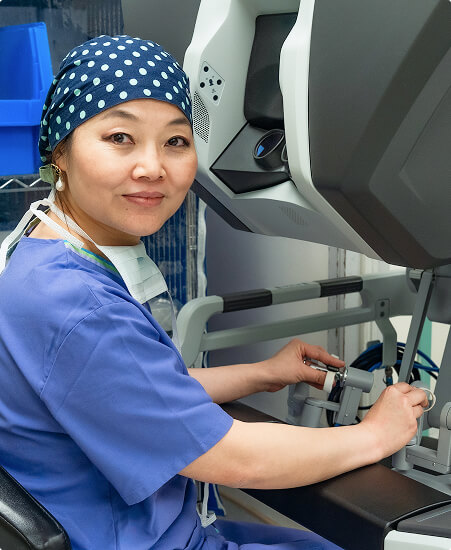
ENDOMETRIOSIS

Deep Infiltrating Endometriosis (DIE)

The most complex and debilitating form of endometriosis — infiltrating deep into pelvic tissues and organs. Specialist robotic surgery offers the best chance of thorough excision.
UNDERSTANDING THE CONDITION

Deep Infiltrating Endometriosis

Endometriosis is a common gynaecological condition affecting about 1 in 10 women of reproductive age. Despite this, it can be difficult to recognise and diagnose, leading to a significant delay in diagnosis.

In Singapore, delays of several years have been reported, while studies across the Asia-Pacific region suggest that women may wait around six to eight years from the onset of symptoms before receiving a diagnosis.

One of the more complex forms is deep infiltrating endometriosis, also known as deep endometriosis, where endometriotic lesions extend into deeper tissues and may involve structures such as the bowel, bladder, ureters and pelvic sidewall.
Common Symptoms
Severe pelvic pain
(cyclical and non-cyclical)
Painful intercourse
Painful bowel movements
Painful urination (dysuria)
Lower back or sciatic pain
Heavy or irregular periods
Bloating and gastrointestinal symptoms
Difficulty conceiving
DefinitionEndometriosis that extends into deeper tissues and may involve nearby pelvic organs.
Common locationsUterosacral ligaments, rectovaginal region, bowel, bladder, ureters and pelvic sidewall.
SymptomsSevere period pain, pelvic pain, painful intercourse, bowel or urinary symptoms and fertility difficulties.
DiagnosisClinical assessment with specialist ultrasound and/or MRI where appropriate.
TreatmentMedication, fertility-directed management or surgery depending on symptoms, disease location and individual goals.

What Is Deep Infiltrating Endometriosis?

The condition occurs when tissue similar to the lining of the uterus grows outside the uterus. It most commonly develops within the pelvis, where it can affect the ovaries, pelvic lining and tissues around the reproductive organs.

In deep infiltrating endometriosis, the disease grows more deeply into the tissues rather than remaining on the surface. It may cause inflammation, scarring and adhesions, and can sometimes involve nearby organs.

Deep endometriosis is not defined simply by how painful the symptoms are. Some women with extensive disease may have relatively few symptoms, while others may experience significant pain despite less extensive disease. The location of the lesions and the structures involved are therefore important when assessing the condition.
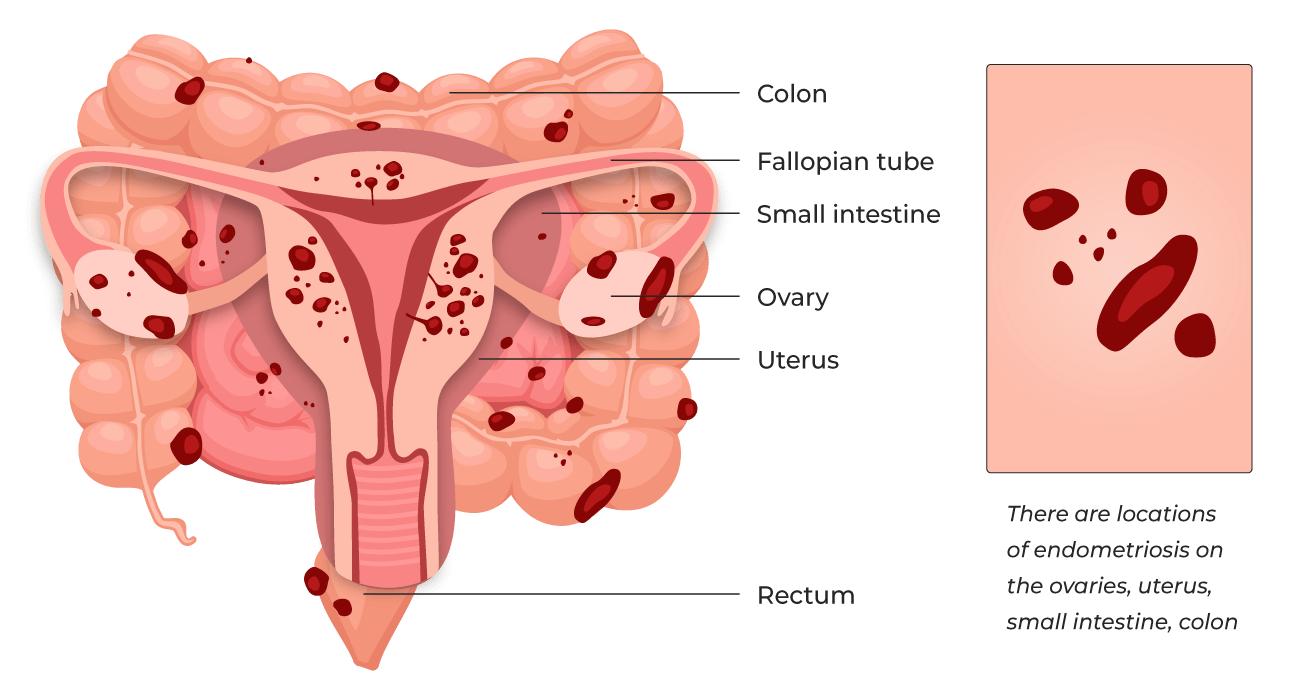
Where Can Deep Endometriosis Occur?

Deep infiltrating endometriosis can develop in different parts of the pelvis and, less commonly, outside the pelvic cavity. The location of the disease can influence the type of symptoms a woman experiences, particularly when nearby organs or nerves are affected.

Some of the areas that may be involved include:

  • Uterosacral ligaments – these ligaments help support the uterus by connecting the cervix to the sacrum. They are among the more common sites where deep endometriosis can develop and may be associated with deep pelvic or lower back pain.
  • Bowel and gastrointestinal tract – when endometriosis involves the bowel (link to bowel endometriosis), it may cause digestive or bowel-related symptoms such as painful bowel movements, bloating, constipation or diarrhoea. Symptoms may become more noticeable around menstruation.
  • Bladder (link to ureter & bladder endometriosis) – endometriosis can develop on the outer surface or, less commonly, deeper within the bladder. Women may experience urinary discomfort, increased frequency or pain when passing urine, particularly during their periods.
  • Rectovaginal region – deep endometriosis may develop in the tissues between the rectum and vagina and can affect surrounding structures. This can result in deep pelvic pain, painful intercourse or pain during bowel movements.
  • Diaphragm – diaphragmatic endometriosis is uncommon and occurs when endometriotic lesions develop on the diaphragm, the muscle separating the chest from the abdomen. Depending on the location, symptoms may include cyclical chest or shoulder pain, shortness of breath or, rarely, coughing up blood.
  • Pleura – thoracic endometriosis syndrome occurs when endometriosis affects structures within the chest, including the pleura, the membrane surrounding the lungs. It is uncommon and may cause cyclical chest pain, shortness of breath or, in rare cases, haemoptysis.
SYMPTOMS

Symptoms and Pelvic Pain

The symptoms of deep infiltrating endometriosis can vary depending on where the disease is located and which structures are affected. Common symptoms include:

  • Pelvic or period pain – pain may be cyclical or persistent and can sometimes occur outside menstruation
  • Deep pain during intercourse – particularly when disease affects the posterior pelvis or rectovaginal tissues
  • Painful bowel movements – especially when bowel or rectovaginal disease is present
  • Urinary pain or frequency – particularly when the bladder or urinary tract is involved

Some women may have extensive deep endometriosis with relatively few symptoms, while others may experience significant pain despite having less extensive disease. Symptoms can also overlap with conditions affecting the bowel, bladder or reproductive organs, which can make diagnosis more challenging.
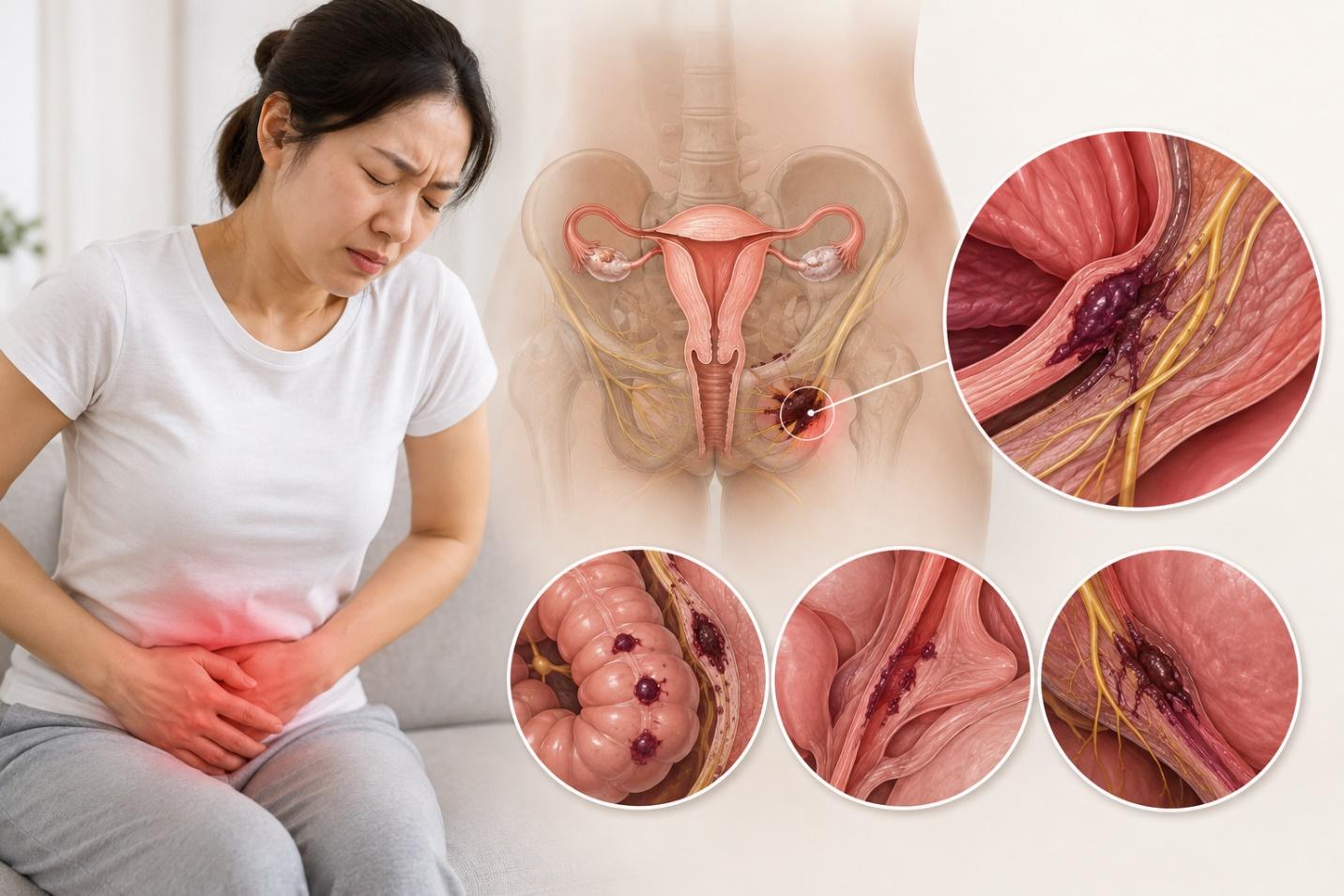
Pain may be persistent or cyclical, depending on the location and extent of disease.
FERTILITY

Does Deep Infiltrating Endometriosis Cause Pelvic Pain?

Pelvic pain is one of the most recognised symptoms of deep infiltrating endometriosis. However, the nature and severity of the pain can differ depending on where the disease is located.

Some women describe the pain as sharp, stabbing or deeply aching, while others experience a persistent sensation of pressure, heaviness or discomfort within the pelvis. Pain may become particularly pronounced during menstruation, but deep endometriosis can also cause chronic pelvic pain outside of the menstrual period.

When endometriosis affects the tissues between or around the vagina and rectum, women may experience pain during sexual intercourse or bowel movements. Bowel or bladder involvement can also produce symptoms that become more noticeable during menstruation.

Persistent pelvic pain can affect far more than physical comfort. It may interfere with work, relationships, sleep, exercise and everyday activities, significantly affecting a woman's overall quality of life.

Does Deep Endometriosis Cause Infertility?

Endometriosis is associated with reduced fertility in some women, although having deep infiltrating endometriosis does not mean that natural conception is impossible.

Several factors may contribute to difficulties becoming pregnant. These can include:

  • Pelvic adhesions, which can cause reproductive organs to become stuck together
  • Distortion of normal pelvic anatomy
  • Damage or reduced function of the ovaries
  • Blocked or damaged fallopian tubes
  • Chronic pelvic inflammation
  • Changes in the pelvic environment that may affect fertilisation or implantation

The impact on fertility can vary significantly between individuals. The location and extent of endometriosis, ovarian reserve, age and other reproductive factors all need to be considered when assessing fertility.

For women who are hoping to become pregnant, understanding the extent and location of endometriosis can therefore be an important part of treatment planning. Depending on the individual circumstances, management may involve medical treatment, fertility treatment, surgery or a combination of approaches.

Individual planning matters

For women hoping to conceive, treatment planning should consider age, ovarian reserve, symptoms, disease location, previous surgery and other fertility factors. Surgery is not automatically required to improve fertility in women with deep endometriosis; depending on the circumstances, fertility treatment, surgery or a combination of approaches may be considered.

Areas Commonly Affected by DIE

UTEROSACRAL LIGAMENTS
MOST COMMON
RECTOVAGINAL SEPTUM
COMMON
RECTUM & SIGMOID COLON
COMMON
BLADDER
LESS COMMON
URETERS
RARE BUT CRITICAL
APPENDIX
RARE
ASSESSMENT

How Is Deep Infiltrating Endometriosis Diagnosed in Singapore?

It can be challenging to diagnose deep infiltrating endometriosis because its symptoms can resemble those of other gynaecological, gastrointestinal or urinary conditions. The time between the onset of symptoms and diagnosis can also be significant, with Singapore data suggesting that some women may experience delays of several years.
Ultrasound assessment for deep infiltrating endometriosis in Singapore
A detailed assessment and appropriate imaging can help map the location of deep endometriosis.

A thorough assessment may include:

  • Medical history – our doctor will discuss your symptoms, menstrual history and overall health. Particular attention may be paid to symptoms such as chronic pelvic pain, severe period pain, painful intercourse, pain during bowel movements or urination, rectal bleeding and cyclical digestive or urinary symptoms.
  • Physical and gynaecological examination – an examination may help identify areas of tenderness, nodules, fibrosis or other changes within the pelvis that could suggest deep endometriosis.
  • Specialist transvaginal ultrasound/endometriosis mapping – ultrasound performed with attention to endometriosis can help identify deep lesions, adhesions and involvement of structures such as the bowel, bladder and uterosacral ligaments.
  • Magnetic resonance imaging (MRI) – an MRI may be recommended when more extensive or difficult-to-assess disease is suspected. It can be particularly useful for evaluating deep pelvic disease and, in selected cases, suspected endometriosis involving the upper abdomen, diaphragm or chest.

Ultrasound and MRI can identify many cases of deep endometriosis, but a normal scan does not exclude every form of endometriosis, particularly superficial disease.

How Is Deep Infiltrating Endometriosis Treated in Singapore?

Treatment for deep infiltrating endometriosis depends on the location and extent of disease, the severity of symptoms, previous treatments, fertility plans and the woman's individual goals. Treatment may include medication to manage symptoms and suppress disease activity, as well as surgery for selected patients.

Surgery may be considered when symptoms remain significant despite medical treatment, when deep endometriosis affects important pelvic structures, or when the extent and location of disease make surgical treatment appropriate.

For complex cases, careful assessment and planning are important, particularly when the bowel, bladder, ureters or other pelvic structures are involved.
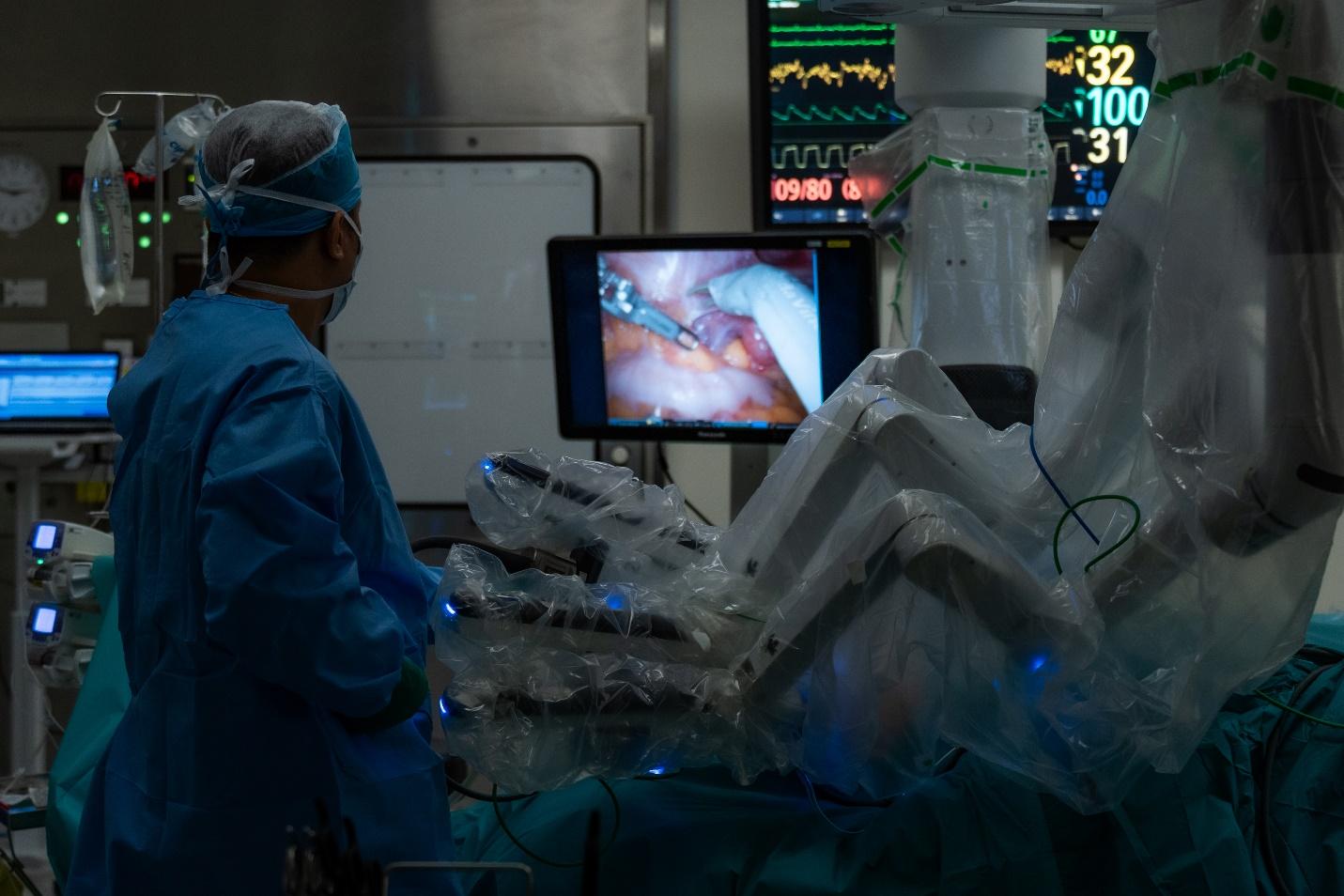
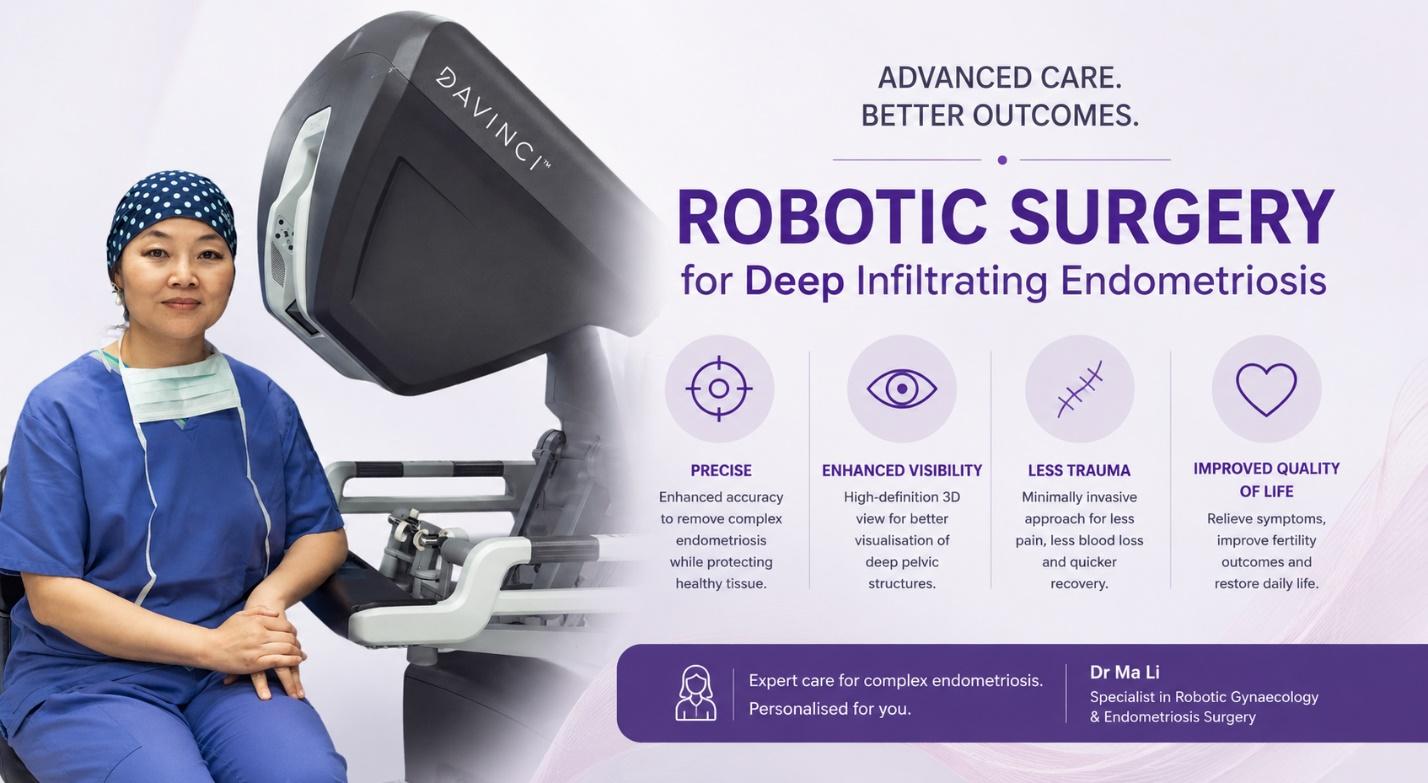
Robotic Surgery for Deep Infiltrating Endometriosis

Robotic-assisted surgery (link to robotic surgery) is one minimally invasive approach that may be considered for selected women with deep infiltrating or complex endometriosis.

The robotic surgical system provides magnified three-dimensional visualisation and articulated instruments that can assist surgical manoeuvring in confined pelvic spaces. However, current evidence has not established robotic surgery as superior to conventional laparoscopy for endometriosis overall. The choice of approach therefore depends on the complexity and location of disease, surgeon experience and the planned procedure.

However, robotic surgery is not necessary or suitable for every woman with endometriosis. The appropriate surgical approach depends on the location and extent of disease, previous surgery, fertility considerations and the overall surgical plan.
Robotic-assisted surgery may be considered for selected complex cases of deep endometriosis where a minimally invasive surgical approach is appropriate.

For complex endometriosis, the goal is not simply to remove visible disease, but to plan surgery carefully while taking into consideration the surrounding organs and preservation of healthy tissue where appropriate.

Surgical treatment for complex deep endometriosis

  • Excision of endometriosis (link to excision of endometriosis) – excision involves surgically removing endometriotic lesions and affected tissue. The extent of excision depends on where the disease is located and how deeply it has infiltrated surrounding structures.
  • Surgery for frozen pelvis (link to surgery for frozen pelvis) – extensive endometriosis can cause dense adhesions, causing the pelvic organs to become stuck together and the normal anatomy to become difficult to identify. This is sometimes described as a frozen pelvis. Surgery in these cases requires careful dissection and identification of the surrounding structures.
  • Surgery for bowel endometriosis (link to surgery for bowel endometriosis) – treatment depends on the depth, size and location of bowel involvement and may range from local excision to bowel resection in selected cases.
  • Surgery for ureter and bladder endometriosis(link to surgery for ureter & bladder endometriosis) – bladder or ureteric disease may require surgery when there is significant infiltration, obstruction or risk to urinary tract function.
  • Hysterectomy (link to hysterectomy) – hysterectomy may be considered in selected women who no longer wish to conceive and continue to have significant symptoms despite more conservative treatment. It does not remove endometriosis outside the uterus and does not guarantee that endometriosis-related symptoms will resolve.

Diagnosis & Pre-operative Assessment

01
Detailed Clinical History
Assessment of symptom pattern, severity, and impact on quality of life.
02
Specialist Pelvic Ultrasound
Transvaginal ultrasound by an experienced sonographer to assess extent of disease.
03
MRI Pelvis
High-resolution MRI to map the extent of DIE — particularly bowel and ureteral involvement.
04
Multidisciplinary Planning
For complex cases, joint planning with colorectal surgeons and urologists before surgery.
SPECIALIST CARE

Managing Deep Endometriosis With Dr Ma Li

Deep infiltrating endometriosis can involve multiple pelvic structures and may require careful assessment and surgical planning. Dr Ma Li has a particular interest in complex gynaecological surgery, including minimally invasive and robotic-assisted approaches for appropriately selected patients.

Where surgery is recommended, the surgical approach is considered based on the location and extent of endometriosis, the organs involved, previous procedures, fertility considerations and the individual's treatment goals.

If you have symptoms suggestive of deep infiltrating endometriosis or have already been diagnosed with extensive disease, a specialist assessment can help you understand your condition and the treatment options available to you.

Book a consultation with Dr Ma Li to discuss your symptoms, diagnosis and treatment options.
COMMON QUESTIONS

Frequently Asked Questions

Is deep infiltrating endometriosis more serious than other types?

It can be more complex because disease may involve or grow close to important pelvic structures. “Deep” describes location and depth rather than automatically indicating symptom severity.

Endometriosis can recur after treatment. The likelihood varies with disease extent, treatment and hormonal environment, so long-term follow-up may be appropriate.

Symptoms may improve as hormone levels decline, but existing disease does not necessarily disappear immediately. Symptoms after menopause should be assessed.

Endometriosis is benign and the vast majority of women do not develop cancer. Some rare ovarian cancers are associated with endometriosis, but the overall risk remains low.

No. Management depends on symptoms, disease location, previous treatment, fertility plans and the effect on quality of life.

Yes. Symptoms may overlap with bowel, bladder, reproductive and other pelvic conditions, which can delay diagnosis.

No. It is one approach for selected complex cases. Suitability depends on disease location and extent, previous surgery, involved structures and the overall treatment plan.

It can affect the ureters. If a ureter becomes narrowed or obstructed, kidney function may be affected, so suspected ureteric disease requires careful assessment.

Yes. Pain severity does not always correspond to disease extent. Extensive disease may cause mild symptoms, while less extensive disease can cause significant pain.

No. Deep endometriosis describes disease type and location; Stage 4 describes overall extent under a staging system. Either may occur without the other.

Deep Endometriosis vs Stage 4 Endometriosis

ElementDeep endometriosisStage 4 endometriosis
DescribesDepth / locationOverall extent
May involve organs?YesYes, but not necessarily
Automatically the same?NoNo
Predicts pain severity?NoNo

Dr Ma Li

MD | MRCOG (UK) | FACOG (USA) | FAMS (SINGAPORE)
OBSTETRICS & GYNAECOLOGY (O&G)

Discover Effective Solutions in
Woman Health

This article has been medically reviewed by Dr. Ma Li
Dr Ma Li is an internationally recognised gynaecologist specialising in endometriosis and minimally invasive surgery, including robot-assisted procedures. She led the Endometriosis Service at NUH from 2015–2024 and has extensive experience managing complex cases, including stage IV endometriosis.
3 Mount Elizabeth #09-08 Mount Elizabeth Medical Centre Singapore 228510

International Patient Friendly

We have extensive experience supporting patients travelling from India, the Maldives, Philippines, Indonesia, and other ASEAN countries.

Clinic Details

Monday - Friday
8:30am - 1:00pm, 2:00pm - 5:30pm
Saturday
9:00am to 1:00pm
Sunday & Public Holidays | Closed
3 Mount Elizabeth #09-08, Mount Elizabeth Medical Centre, Singapore 228510

Seeking Expert Advice on DIE?

Dr Ma Li is one of the most experienced robotic surgeons for deep infiltrating endometriosis in Singapore.
Contact us for a specialist consultation.

Ready to Take
the Next Step?

Whether you are in Singapore or travelling from abroad, Dr Ma Li's team is ready to support your journey.
Book a consultation or speak to our team today!
Singapore's specialist in robotic gynaecological surgery for endometriosis, fibroids, and complex cases.
BOOK CONSULTATION →GET LOCATION →
cross